
General Treatment
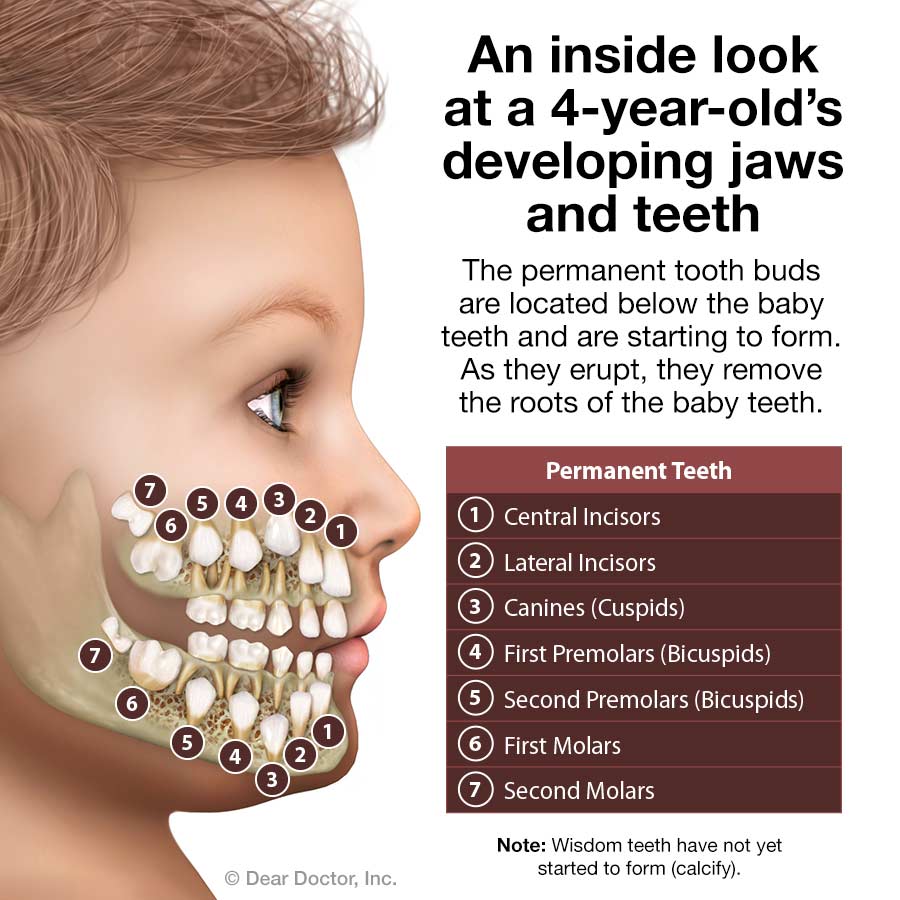 Your child won't keep their first teeth forever, but that doesn't mean those tiny pearly whites don't need conscientious care. Maintaining your child's dental health now will provide health benefits well into adulthood, as primary (baby) teeth serve some essential functions.
For one thing, primary teeth guide the eruption of permanent (adult) teeth, holding the space for these new teeth to erupt. The crowns (tops) of the permanent teeth push against the roots of the baby teeth, causing them to resorb or melt away. In this way, the adult teeth can take their proper place.
What's more, your child's primary teeth will be there for most of childhood, helping your child to bite, chew, and speak. For the first six or so years, they will be relying on primary teeth exclusively to perform these essential functions. Until around age 12, your child will have a mix of primary and permanent teeth. You will want to keep those teeth healthy and let them fall out naturally— when it's time.
Tooth-brushing for Children
Acid Attack on Teeth!
Your Child's First Teeth
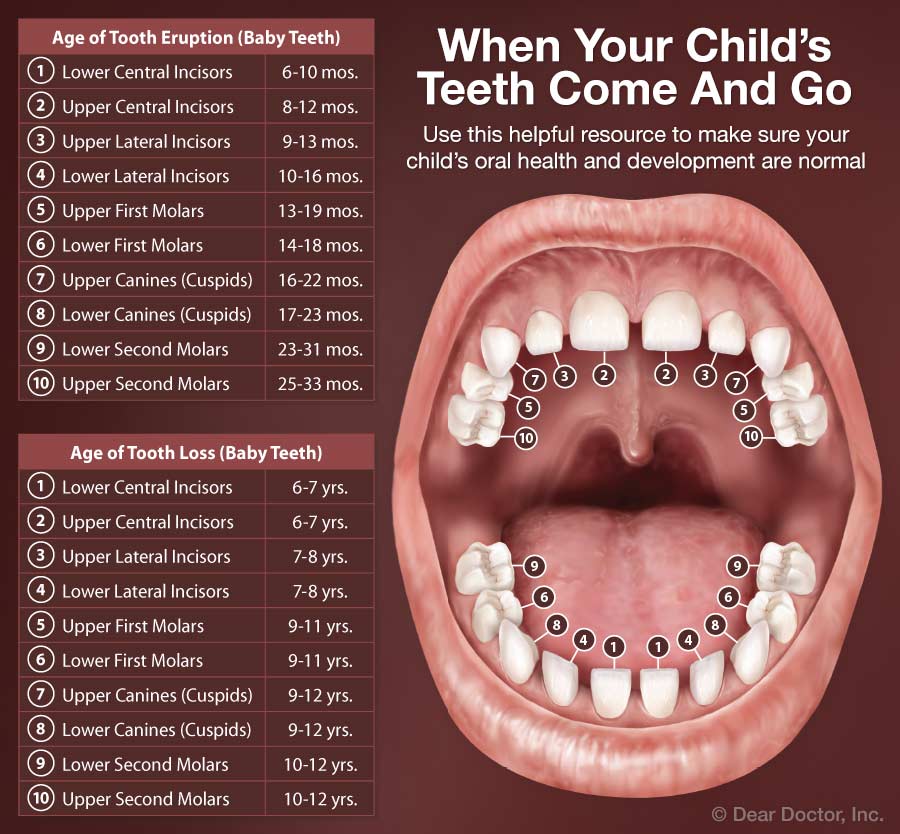
Your child's 20 baby teeth usually begin to appear between six and nine months, though in some cases they may start as early as three months or as late as twelve months. The two lower front teeth tend to erupt first, followed by the two upper ones. The first molars come next, followed by the canines (eyeteeth). Sometimes, your baby can experience teething discomfort during this process. If so, let us know, and we will advise you on the best course of action.
Gently wipe your infant's gums and newly erupting teeth after each feeding with a water-soaked gauze pad or damp washcloth. Clean any teeth that have fully come in with a small, soft-bristled toothbrush and no more than a thin smear of fluoridated toothpaste. Starting at age 3, you can teach your child to brush with a pea-sized amount of fluoride toothpaste. Your child may need your help with this important task until about the age of 6.
The First Dental Appointment
The American Academy of Pediatric Dentistry recommends bringing your child to see us by their first birthday. Though this may sound early, we can teach you proper pediatric oral hygiene techniques, check for cavities, and watch for developmental problems
Various forms of tooth decay can affect babies and small children. Early Childhood Caries (tooth decay) can develop rapidly, progressing from a tooth's hard outer enamel layer into the softer inner dentin in six months or less.
Most of all, we want to ensure your child has a positive experience at our office and will be a regular visitor for years.
Bonding
Chips and minor fractures to front teeth — common childhood occurrences — can be repaired with tooth-colored bonding materials. These lifelike resins made of plastic and glass can be used on baby teeth as well as permanent teeth and last until the youngster has completed facial growth
Orthodontic Concerns
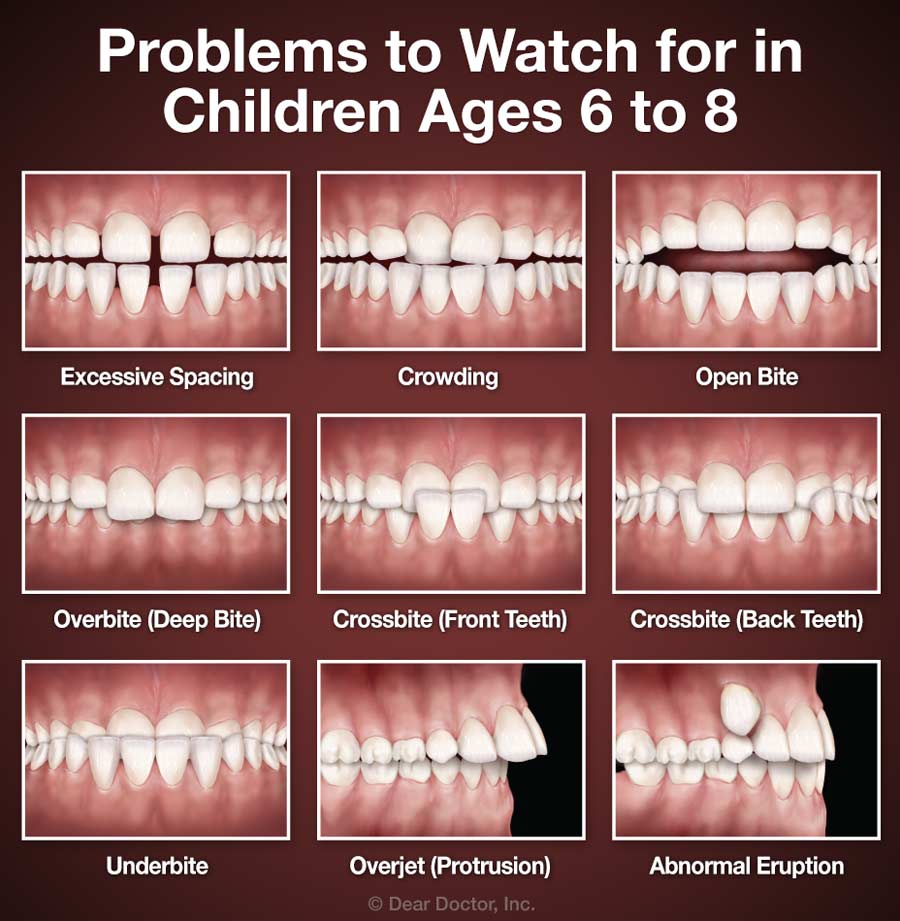
Most malocclusions become evident by around age 7. Interceptive orthodontic treatment around this time can help direct proper tooth positioning and/or jaw growth, eliminating or simplifying the need for later treatment. Many orthodontic problems can be detected early, which is why a trained professional should evaluate your child during their growth and development.
Root Canal Treatment
Perhaps you have had a root canal treatment yourself to save an injured or severely decayed tooth. Well, sometimes children need root canals, too. As mentioned above, baby teeth are essential guides to the permanent teeth already forming beneath your child's gums. Therefore, saving them from premature loss can help prevent a malocclusion ("mal" - bad; "occlusion" - bite) that requires orthodontic treatment.
Sports & Your Child's Teeth
If your child plays sports, we highly recommend a mouthguard. Mouthguards are estimated to prevent more than 200,000 injuries each year. Please ask us about mouthguards at your child's next appointment.